Wednesday, July 27, 2016

How My Best Teacher Gave Me My First Job

My school years involved many moves and I attended more schools than grade levels. My husband can name every grade school and home room teacher he had but I remember only a couple of names. No single teacher left a great impression on me personally. I believe a great teacher teaches more than a lesson plan. They instil a passion for learning and make themselves vulnerable by sharing learning experiences from their own life.

The head of the physiotherapy school I attended was a real "battle-axe". She acted like a drill sergeant and never cracked a smile. Half of our class dropped out before the last year, usually leaving in tears. She made a cake for us on the last day, just before we graduated. I distinctly remember her talking about using unsalted butter in the icing. It was such an uncharacteristic comment. We were in shock as she smiled and started to tell us about her life in England during the war. She spoke of a love lost and how she was returning to Britain to care for her ageing mother. My education was excellent but I wonder how much more I would have learned, without fear, if she had shown us her personal side earlier.

My best teacher and the person who recognized I was ready for my first "job" was my mother.

Mom went to university and teachers' college before she was married. She taught kindergarten in a poor Toronto neighbourhood for a couple of years after she was married and then she and Dad went to South Africa. Mom was a gifted teacher and even though she did not work at a paying job again, she taught at church and at home. She taught me to read before I went to school and encouraged academic excellence in all of us. She was confident and instilled confidence in each of us.


I was 5-1/2 years old when my second brother, Philip was born. My first brother, Nathan is 18 months younger than me and I don't remember life without him. He was my main playmate and confidante. I remember the excitement of having a baby in the house and I loved to look after him. I changed his diapers which were bulky flannel things with big pins. I carried him around on my hip before he could walk. (After he learned to walk, he refused to be carried and that is an analogy of his entire life)

Mom brought Mark home when I was 8 and Stephen arrived when I was 9. I was happy to look after them. When Stephen was 3 months old, our family was in a serious car accident and Mom was in and out of hospital for a few years. Dad was also badly injured. That is when I truly became the keeper of my little brothers and learned how to manage household chores.

In spite of Mom's injuries and surgeries, she cooked, canned, prepared food for the freezer, sewed our clothes, made curtains, and was active in the church, even when she was on crutches. When I was 11, she bought material and a pattern and I made my first dress. I learned to cook and do laundry around the same time. I was always encouraged, not criticized for my efforts which I am sure were substandard at times. My maternal grandmother rounded out my education, taking me on trips, introducing me to many good books and going places with her interesting friends. She was a retired doctor but volunteered at the local nursing home on Saturdays. I worked in the tuck shop with her, serving ice cream and learning to count change. 

This morning I watched the owner of this fishing camp and his teenaged daughter doing repair work in one of the cabins. She was using a drill and worked under his casual direction fixing some latches. After that job was done, she drove him in a golf cart, as a work partner, to their next project. As well as spending time with her dad, she is gaining confidence and learning valuable skills. 

Some of my friends and coworkers spend a lot of time driving their children to camps and various activities. They don't have time to cook proper meals and home is just a place to sleep. Children are eager to help and no task is too mundane, especially if it involves the time and attention of a parent or grandparent. We took music and sports instruction too, but our most important life lessons were learned in unstructured time with the family. 

Ginger wrote a poignant post about giving and the need throughout life to contribute to your group. We all need community, purpose, and a job whether we are 5-1/2 or 85 years. The lessons my mother taught me can be applied through a lifetime.

Tuesday, July 26, 2016

A Cup of Peace


Tea is my favourite beverage. Period.
Why drink water when you can drink tea?
Black tea, white tea, green tea, chai, kombucha, tisanes. 
Made properly from quality leaves, not sweet, milk in my hot black tea please.
Several times a day, every day.

I started experimenting with coffee recently, grinding freshly roasted, bird-friendly beans and steeping them like tea in a French press. A little sugar and cream please...delicious!

Our daily indulgences, including tea, coffee, chocolate and sugar, can come at a great cost. Low wages, slavery, child labour, limited access to education, poor working and housing conditions, use of dangerous chemicals and ecological disruption are some major production issues. Pesticide traces in some teas exceed recommended limits which matters more for people like me who consume it frequently.

Fortunately, we can take small steps to improve the lives of people in countries that produce these products and also decrease our exposure to harmful chemicals. Awareness is the first step.

The Ethical Tea Partnership website states that they are creating a fairer, better, more sustainable tea industry -for tea workers, farmers, and the environment. Their current partners are listed here and include many of the popular tea brands. 

I have purchased Dilmah tea recently because of their commitment to ethical production practices. It is available in specialty shops in our city and online. I also order organic loose tea from Tealyra. It is hard to go back to teabags once you use full-bodied tea leaves. I truly do not understand why tea and coffee pods are so popular. Besides the expense and waste, the tea and coffee is low quality and heated plastic disrupts our hormonal balance. 

Join me at the dock, early in the morning for my next pot of really good tea.

Monday, July 25, 2016

Light Parables


We are on summer vacation, a vacation I was reluctant to take. Life has been busy and I felt too tired to organize meals and household necessities needed for a week-long stay in a "rustic" cabin at a fishing camp. The world seems like such a dark place right now. Bad news stories overwhelm the media and social civility is at a low level. I decided to forego news and social media for a week and to spend time rejuvenating my soul and spirit in nature. My outlook has brightened significantly already!

Solar lights are situated at the edges of the deck of our cabin. The lake breezes keep mosquitoes away even after sunset making it comfortable to sit outside. Darkness is intense away from a city and the light from the small solar cell is surprisingly bright. I think Jesus would have told a parable about a solar light rather than an oil lamp if he was giving sermons on earth today. Energy from the source of light is stored and then reflected in rays that represent all facets of life. Light is always stronger than darkness. In that little solar light I see an image of what I need to be;- a light in the darkness caused by illness, grief, fear, pessimism and hopelessness. 

The full moon was a week ago and the moon rises later each night making it visible in the daytime. I like to see moonlight on the water but that will not happen while we are here this year. The moon also gets its light from the sun and reflects it to the earth. 


 We sat in a cemetery outside the city on September 27, 2015 and watched the full eclipse of the moon. The earth moved between the sun and the moon causing the moon to darken completely. It is not surprising that ancient people feared such an event when they did not have the scientific knowledge to understand what was happening. If negative circumstances and cares of life block us from our light source, we too can become "darkened" in spirit. Losing our power source in today's world can happen subtly and finding it again requires self-reflection and rebalancing of priorities. And that is my goal for this week.


"You are the light of the world.
 A city set on a hill cannot be hidden; nor does anyone light a lamp and put it under a basket, 
but on the lampstand, and it gives light to all who are in the house.
 "Let your light shine before men in such a way 
that they may see your good works, 
and glorify your Father who is in heaven. 
 Matthew 5:14-16


Wednesday, July 06, 2016

Light, Darkness, Hope and Despair

She sat in the chair with her knees to her chest and her feet on the seat. She was so thin it seemed possible to fold her up and put her in an envelope. Her struggle with anxiety had gone on for decades and she craved medication more than food. Multiple investigations in the hospital revealed no specific pathology but she was too ill to function on her own.


He sat on the ground, his deformed, paralyzed legs folded beneath him. Spina bifida had left him this way from birth. He moved around in the dirt, pushing and lifting his body with his strong arms. He had no wheelchair or mobility aid. I watched as he sat in the shade in the courtyard of his home, singing and playing his guitar to no one in particular. Contented and part of a family and community in a poor Mexican fishing village, he had no complaints. 


All creatures are designed to survive in the best of times and the worst of times. It is normal to store fat in times of plenty to sustain life in times of famine. Animals, birds and other creatures are in a constant struggle with the elements and predators. Humans have always dealt with uncertainty. Natural disasters, wars, economic crashes, plagues and other illnesses have been present throughout recorded history. The human spirit is resilient and heroic human behaviour is usually born in adversity. Challenge and struggle is necessary to attain our full potential and strength;- emotionally, spiritually and physically. 

Canada is a country free of war and famine, a country with free medical care and social assistance. We have a democratic government and a fair judicial system. We have a better standard of living than the majority of people in the world, past and present. Most people I know are generally happy but there is an undercurrent of cynicism, criticism and dissatisfaction in our affluent society that is pervasive and destructive. Too many people struggle with addiction, depression, anxiety, lifestyle related illness, autoimmune diseases and a lack of purpose and hope. It is as if we expect life to be perfect making it difficult to cope with adversity in a healthy way. 

I watched a discussion recently where Bono and Eugene Peterson discuss the Psalms. In it, Bono says: “I would love if this conversation would inspire people who are writing these beautiful voices and writing these beautiful gospel songs — write a song about their bad marriage, write a song about how they’re pissed off at the government, because that’s what God wants from you. That truth — ‘the way, the truth’ — and that truthfulness — know the truth, ‘the truth will set you free’ — will blow things apart.”

Praise is meaningless if we have never experienced pain. We cannot appreciate light without experiencing darkness. It is important to face trouble with honesty and hope, not blame and cynicism. We need to make sure our children learn early that life is not always easy, maturity develops though adversity, and that perseverance is essential. Happiness and fulfillment comes from an attitude of gratitude, cultivating meaningful relationships, proper care of the body and soul, having achievable goals, and developing the ability to handle stress. 

Steve Bell is one of my favourite musicians (as well as being a Canadian) and I find his lyrics very meaningful and honest. Here is part of his adaptation of Psalm 90.

Psalm 90- Steve Bell 

Satisfy us in the morning with Your love
That we may sing for joy
And be glad in all our days
Satisfy us in the morning with Your love

Match the days Lord of our sorrow with Your joy
May Your deeds be always known
To the ones you call your own
Match the days Lord of our sorrow with Your joy

May the favour of the Lord
Rest upon us and our land
And establish for us all
The work of our hands

Yes the work of our hands

Monday, June 27, 2016

Finding a Table


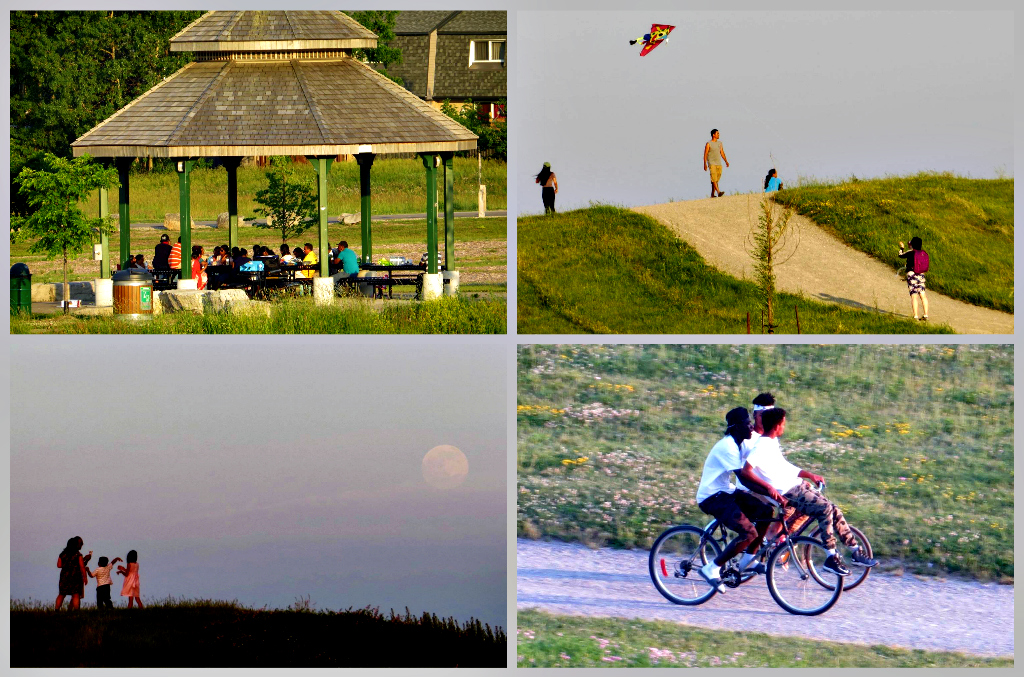
Summer arrived a week ago I watched the solstice sun set and full moon rise over the city. The park near our home is well used by people in the neighbourhood, particularly by families who have moved here recently from other countries. Our city was very white when I came here 40 years ago but now we have a diversity of cultures represented. The newer immigrants tend to live in nearby apartments and row housing without the benefit of large yards. That could be one reason they come and spend evenings in the park. I admire their sense of family and community. We shop at a nearby international food market for items like injera, less common spices and pulses and other treats from the middle east and south-east Asia. The young, friendly cashiers in their hijabs speak English without an accent while shoppers from older generations prefer to use their native languages in the store. It does not take long to assimilate children to a new culture but it is harder for adults to find a place in the community.


I go to the Apple store at the mall a couple of times a year. It is my favourite retail experience of all time. The store is inviting, the staff are helpful but not pushy, you can use the displayed devices for as long as you want, children are welcome, questions are answered, lessons are available, and the customer is truly most important. It is an ideal set up for meaningful social interaction and I think churches could take some tips from the store. Come in, ask questions, share, learn, discuss face to face rather than looking at the back of heads in front of you. And all of this is done without pressure or judgment as employees are not allowed to speak negatively about each other or the customer. It reminds me of “The Great Hall” in C. S. Lewis’ Mere Christianity where people from all walks of life and different “rooms” come to discuss spiritual things together. 

An “Apple store” approach would be useful in getting to know and understand our neighbours from other countries. We all have things in common. The fear-mongering rhetoric concerning immigrants in America and in Great Britain during the recent Brexit referendum is destructive and regressive. We need to find a common table and take time to get to know and value the people in our neighbourhoods. I am proud that Canada continues to accept refugees and immigrants as it has for many years. But it takes work to build friendships and community with mutual respect and trust.


Sunday, June 26, 2016

Summertime


Lake Manitou, Manitoulin Island, Ontario, Canada- view from our cabin

My childhood summer memories are spread across two hemispheres and much travel. I was born during a summer thunderstorm in January and my Christmas break from school was also our summer holiday. I remember trips from Durban to northern, higher, cooler altitudes during the hottest season as well as weekends at the beach on the Indian Ocean. I had no sense of seasons in South Africa.

In Canada, I enjoy the marked change of seasons but prefer the transitional ones, fall and spring. My perfect calendar would include two months of May and two of September, sacrificing November, December or even July. Some of our best holidays have been in September and October.

Lake Huron at Goderich, Ontario

I love the months we can sleep with the bedroom window open and when going outdoors is comfortable and convenient. Canadian winters are beautiful, treacherous, long and unpredictable. In our area of Ontario, summers are hot and humid and mosquitoes and other biting insects keep me away from my favourite trails. We have stayed in summer cottages in central Ontario where mosquitoes, black flies and deer flies have left us with scores of welts and sleepless nights as whining insects buzz in our ears.

Common Loon on Manitoulin Island

In my opinion, the only place to spend an Ontario summer vacation is on a LARGE body of water where insects are kept away by lake breezes. I love the beaches on Lake Huron and we vacationed at Southampton for several years when our children were small. Now, we usually spend a week on Manitoulin Island, the world's largest freshwater island in Lake Huron. The sound of waves, the call of the loon, the full moon on the water at night all speak the best of summer to me. A Muskoka chair, a good book and a cup of tea at the water's edge is a picture I keep in my mind on stressful days at work.

Inukshuk on the shoreline of Lake Huron at Goderich, Ontario

One thing I would advise my 20-something year old self would be to settle and work in a community on one of the Great Lakes. We are within 1 to 2 hours driving distance of Lakes Ontario, Erie and Huron but I would love to experience their moods every day, not just in the summer. Perhaps that will still happen. 

Sunday, June 19, 2016

Sing, Sing a Song

Street Performers, Charlottetown, Prince Edward Island

Birds sing, frogs sing, cicadas sing, mice sing, humans sing. Even if we think we are not musical, our hearts beat and our nervous systems hum. Each community and culture has a musical identity and we learn the nuances of our native rhythms, scales and tones at a very young age. Musical memories are long lasting and are often seated with emotional memories. Learning is enhanced when it is put to music and children learn the alphabet and numbers quickly to song.

Communities are increasingly diverse with a rising number of popular musical genres. My childhood home was filled with music. We all took music lessons and practiced our instruments in the living room. When records were played, everyone shared the experience. Dad listened to classical music on the radio every night after we went to bed and we went to sleep hearing the likes of Beethoven, Mozart and Chopin. Now, we are plugged into our individual iPods and seldom share music together. Once in a while I listen to my daughter’s playlist and try to make sense of “ska”, “metal” and other alternative songs that are as familiar to my brain as speaking Punjabi. My brain is too set to become fluent in new language or music styles.

Singsongs in Miramichi NB and Twillingate NL

This past summer we went to Newfoundland, the only Canadian province we had not visited. Newfoundland culture is unique as geographic isolation has allowed language and music to change at a much slower pace than the rest of North America. Communities on The Rock are often remote and all generations work and play together. Newfoundland kitchen parties are common and we attended a couple of them. The events have live music with instruments that range from guitars, fiddles and keyboards to spoons and ugly sticks. There really isn’t much distinction between audience and performers as everyone is free to sing and dance along. I loved Newfoundland and its people and their spontaneous, joyful musical expression.

Every Friday afternoon, a group of “Newfies”, who now live in Ontario, come to the hospital for a singsong with the patients. They play from a book (words only) with at least 100 songs and take requests from the audience. It is a transplanted kitchen party and they sing for a couple of hours at least. I took a patient with early onset advanced dementia to the auditorium when they were singing  “Leaving on a Jet Plane” by John Denver. 

“Peter, Paul and Mary,” he said as he sang the words. 

I am always amazed at music memories people retain. Each week we have a drum circle where patients choose a rhythm instrument and sing simple, familiar songs. Even if they don’t know the words, they can carry the beat.

We risk losing a shared musical community in our diverse urban world. The best music experiences link us with others. Christmas carols and songs are one of the few genres of music left that are widely familiar across generational groups in Western culture. Give me a kitchen party, a street party, a performance in a park or a singsong in the hospital. Give me a song I can sing and play too. 

Music on the street in old Montreal PQ

Sing, sing a song
Sing out loud
Sing out strong.
Sing of good things not bad
Sing of happy not sad.

Sing, sing a song
Make it simple to last
your whole life long.
Don't worry that it's not
good enough for anyone
else to hear.
Just sing, sing a song.

Joe Raposo

Monday, June 06, 2016

Unsolicited Advice

Fifty years later...impossible!


I received a five year diary for my twelfth birthday and remember thinking that I would be 17 years old when I finished my entries. Seventeen! I could not image being that old. And so I entered my teen years in the late 1960s.

What would I tell my younger self from my vantage point several decades later? Would I listen to advice, sound or otherwise? The voice of the moment is stronger than voices of experience in the past or future. And that present voice is usually our own. I doubt my younger self would have listened to all these words but this is what I would say.

The world will still be here in 50 years. Don’t stay awake at night worrying about the cold war or the rapture. 

You will continue to be part of a growing family you love and who love you.

You cannot even imagine the changes that will happen in the next half century. Embrace change without fear. Don’t be afraid to ask hard questions but be wary of people who think they have all the answers.

Everyone has a story. Take care to listen closely without judging. Be gracious and kind to everyone. There will always be one difficult person in your life and they will help you grow and mature if you are willing to learn. 

Don’t gossip or criticize others. And take great care not to become cynical, bitter or sarcastic. Don’t try to have the last word but know when to walk away from conflict. Live joyfully, peacefully and with contentment.

Most of us resist unsolicited advice. But the impact of stories, film, music and other expressions of popular culture can strongly affect the way we see the world. This song was popular in my teen years and I still have a copy of the Desiderata poem above my desk at work. One of my younger co-workers read it recently and remarked at its wisdom and beauty. She had never heard it before! So here is is to enjoy. I couldn't express advice better than this.