Showing posts with label spirituality. Show all posts

Wednesday, December 19, 2018

The Basis of Belief


What do you see when you look at this picture? If ten people wrote a story about it, there would be ten very different accounts.


  • A groom or horseman may focus on the horse, analyzing its health, gait and performance.
  • A sulky driver would notice the cart and harness.
  • A farmer would see the horse in a different light than a race horse owner.
  • An Old Order Mennonite would notice the distinctive hats and clothing of various sects of their faith.
  • A shopper would recognize the market setting.
  • A local resident may know the context of the picture and be familiar with the event that is in progress.

I listened to an interesting interview on the CBC Radio One show The Current. James E. Alcock discussed his book Belief: What It Means to Believe and Why Our Convictions Are So Compelling.

The introduction to the book states,
"This book explores the psychology of belief - how beliefs are formed, how they are influenced both by internal factors, such as perception, memory, reason, emotion, and prior beliefs, as well as external factors, such as experience, identification with a group, social pressure, and manipulation. It also reveals how vulnerable beliefs are to error, and how they can be held with great confidence even when factually false."

I shared a post last month titled Retelling a Story where I discussed how people see events in unique ways. I can be impatient with people who hold views I feel are inaccurate or untrue. I get annoyed with those who share biased or sensationalized information online. Rather than remaining perpetually upset, I went off Facebook and blocked people on email who frequently sent memes. Many of my family and acquaintances are conservative in politics and belief while I lean liberal in comparison. I disagree with many things that others hold as indisputable truth. 

This discussion on belief got me thinking that I should not be so harsh with people who see things differently than myself. I am not perfect. My perspective of life is based on six decades of living, a career that requires analytical and objective proofs, the privilege of education, travel and a stable, middle-class lifestyle in a first world country. Every person has unique life experiences and influences. Many people align with a group, giving unquestioned allegiance because belonging can be more important socially than looking for truth.

I remember when election campaigns were positive, without attack ads and smear tactics. Negative campaigning gained popularity in the last 30 to 40 years and I feel that social civility has declined, especially as we communicate with people who have a different belief systems than ourselves. The American political scene is very disturbing to me and I cannot understand why so many people stand behind a deceitful, lying leader. I read a few books this year that opened my eyes to the social history and experiences of many Trump supporters. I wouldn't recommend buying all of these books (*listed at the end of this post), but if they are available in a library they are worth reading. 

Can we accept people who have different outlooks, granting them courtesy and respect as we hear their point of view? We should be open to listening to the perspectives and opinions of others and try to understand where they are coming from. Parents need to pass essential values to their children and grandchildren as well as a sense of their family history. Parenting is an important task and our children need a good moral base. But life in the 21st century is far different from my formative years in the last half of the 20th century. I do not want my children to be personal clones but desire that they will be able to discern, be critical, ask questions, make their own mistakes, and eventually come to their own conclusions without fear of reprisal on my part.

There are people who flaunt their opinions loudly and obnoxiously without regard for anyone but themselves. We need to stand up to bullies who mistreat vulnerable people. But I believe most people can discuss different viewpoints and experiences with self control and respect, especially if we model respect in return.
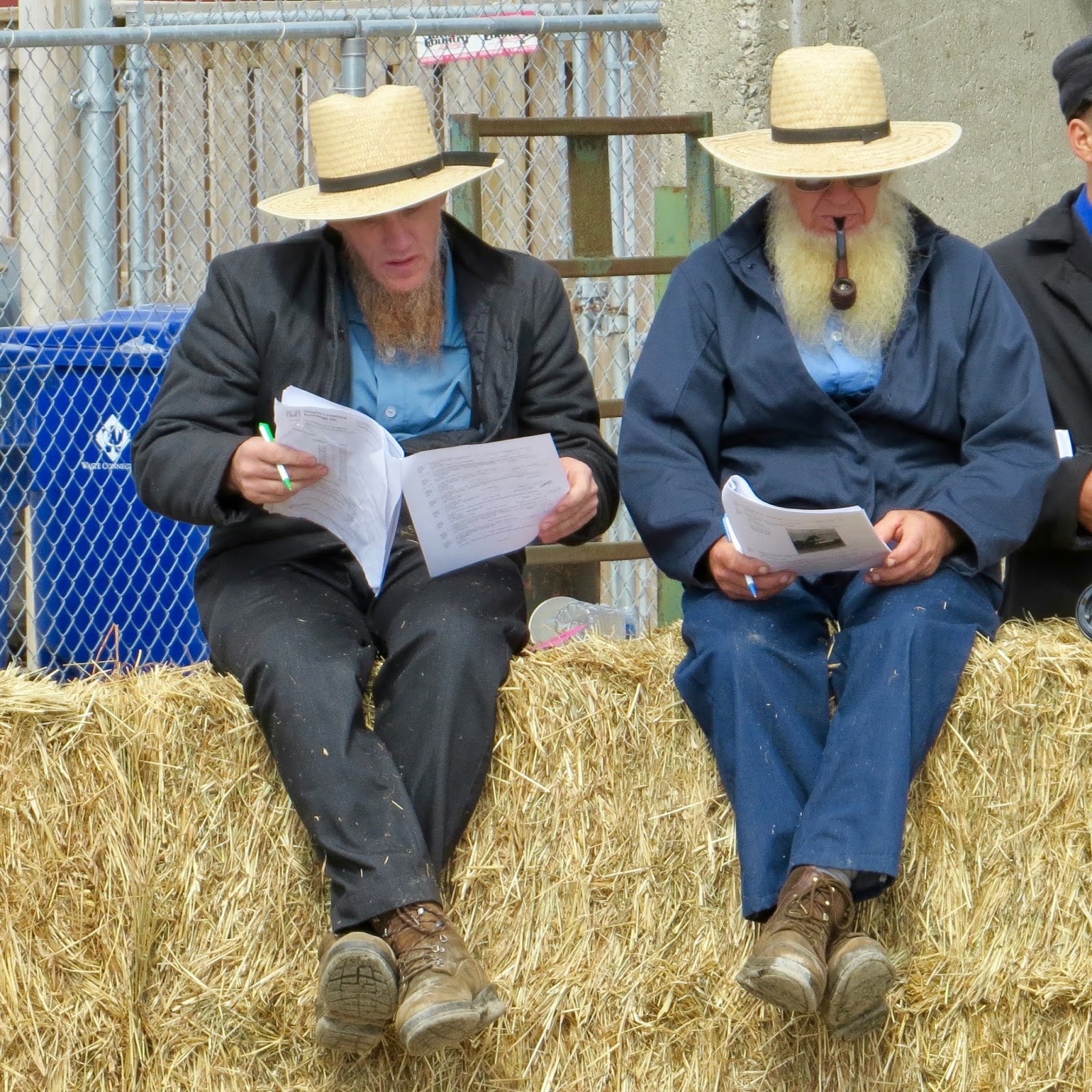


The pictures in this post were taken at the September horse auction at St. Jacobs' Farmers Market in Waterloo, Ontario. I can guarantee that the memories of this event will be different for the two older men than it will be for the two young boys observing from their perch on a round bales of hay. Even in this very conservative group, experience, external factors and perceptions will continue shape the beliefs and values of upcoming generations.


*Books:
  • Hillbilly Elegy -J.D. Vance
  • White Rage- Carol Anderson
  • White Trash: The 400 year untold history of class in America- Nancy Isenberg
  • The Righteous Mind: Why good people are divided by politics and religion- Jonathan Haidt

Sunday, December 02, 2018

Wishes or Hope


One of my daughters teaches English as a second language to adults at a community college. She said the subtle difference between the words “hope” and “wish” are difficult to convey to her students in denotation and connotation.


I wish...

I could turn back the clock
I looked like him/her
I was successful like him/her
I had a new car
it would stop raining
I had a better job
I had enough money to retire

I hope…

the world will be a good place for my grand daughter
my car will last a few more years
I can budget my money wisely and save a little each month
I can make a difference in my community
I remain healthy as I care for my body
I can take a trip to ________ soon
I can pass along good spiritual values to my family


We can spend a lot of time passively wishing for things that are unlikely or impossible to happen. Some people expect God to act like a genie in a bottle who grants their wishes miraculously on demand. On the other hand, we can work toward fulfilling our hopes and dreams for things that realistically could happen. The human spirit needs hope and we are inspired by stories of people who persevered through difficulty to achieve their goals. 


Negative attitudes destroy hope. As I get older I need to encourage younger generations and act in ways that show that I believe in their future. Am I doing my best to care for the earth, to be relevant with my beliefs rather than looking back to “the good old days”? Some have lost hope due to abuse, loss, poverty, social pressure, depression or other illnesses. How can I make a difference in my community to help those in need?

Advent is a season of waiting and hope. Proverbs 13:12 says,

“Hope deferred makes the heart sick, but a longing fulfilled is a tree of life” 


Let us work to help make someone’s longing a reality. 

Saturday, April 22, 2017

Four Years


I went to Mexico in January to stay with my father while my brother and his family were away. Some things are different, but many things in the house are still the same since Mom died. The kitchen was her domain and the drawers and cupboards are mostly unchanged. My teapot still sits on top of the fridge and pots, utensils and containers are in their rightful places. Her handwritten inspirational sayings remain attached to the fridge door with magnets.

Grandma Devins took a trip to Scotland in the late 1960s or early 1970s. She brought back a spurtle which is a wooden stirrer for making creamy porridge. Porridge was a served every morning in our home except for Saturdays when we had Shreddies. On Sundays, raisins were added to the gruel. Mom used the spurtle for years and the wood finally cracked. One of the last things she asked me to bring her from Canada before she died was another spurtle. I never found one and the old cracked one is still in the kitchen. Each morning I made porridge for Dad and myself and stirred the grains to perfect creaminess with the old kitchen tool…and thought of Mom. I almost brought it home, but left it where it belonged.

The kitchen is still the heart of the home. I squeezed orange juice while Mom’s dog Inge, who is now 11 years old, slept in the corner. Her great-grandson who was born a couple of weeks after her death, played hide and seek at the kitchen counter. Family photos remain on top of the grand piano and I saw my mother in my face. It upsets my father to speak much about her, but he continues in routines they set together and "sees" her often.

I watched the Vermillion Flycatcher outside the kitchen window in the mornings and admired the vermillion sunset over the mountains in the evening. The swallows returned to their nest outside the door and hummingbirds hovered around the flowers in the garden as they did when she was here.

Today marks four years since she left. I made porridge for breakfast and reminisced with some family members who called. Dad is not well and seems to decline step-wise at this time of year. Here are some verses from Psalm 90 that I love.

Lord, you have been our dwelling place
throughout all generations.
Before the mountains were born
or you brought forth the whole world,
from everlasting to everlasting you are God.

You turn people back to dust,
saying, “Return to dust, you mortals.”
A thousand years in your sight
are like a day that has just gone by,
or like a watch in the night.

Yet you sweep people away in the sleep of death—
they are like the new grass of the morning:
In the morning it springs up new,
but by evening it is dry and withered.

Our days may come to seventy years,
or eighty, if our strength endures;
yet the best of them are but trouble and sorrow,
for they quickly pass, and we fly away.

Teach us to number our days,
that we may gain a heart of wisdom.
Satisfy us in the morning with your unfailing love,
that we may sing for joy and be glad all our days.

Make us glad for as many days as you have afflicted us,
for as many years as we have seen trouble.
May your deeds be shown to your servants,
your splendour to their children.

May the favour of the Lord our God rest on us;
establish the work of our hands for us—
yes, establish the work of our hands.

Tuesday, December 13, 2016

Earth's Crammed with Heaven...


TRUTH, so far, in my book;—the truth which draws

Through all things upwards,—that a twofold world

Must go to a perfect cosmos. Natural things

And spiritual,—who separates those two

In art, in morals, or the social drift
        
Tears up the bond of nature and brings death,

Paints futile pictures, writes unreal verse,

Leads vulgar days, deals ignorantly with men,

Is wrong, in short, at all points...


Earth’s crammed with heaven,

And every common bush afire with God;

But only he who sees, takes off his shoes,

The rest sit round it and pluck blackberries,

And daub their natural faces unaware...

From ‘Aurora Leigh’ by Elizabeth Barrett Browning. 


I read part of this poem today and wanted to share this excerpt, if for no other reason than to remember it myself. There are so many similes that resonate with me in her writing.

And so I will go about my day looking for inspiration in my routine, in the ordinary people I will encounter, in the hustle and bustle of the city and the solitude of nature. 

Sunday, November 27, 2016

Possessed by Possessions


Advent is here again, already, so soon. It is hard to concentrate on a season of waiting when we are so busy that each week seems to pass as quickly as a day. The city streets were congested today with shoppers rushing about to snap up Black Friday weekend deals. 

We went for a walk in the woods and even though the dog became mired in a muddy bog shortly after this picture was taken, nature was nurturing and relaxing. 

I am not buying or receiving Christmas gifts this year and it was liberating to make that decision. I want to focus on spending unhurried time with people, over a meal, at a seasonal event, outdoors or indoors, without the obligation of gift-giving and reciprocation. There is nothing wrong with gifts. I just prefer to spread the giving over the year, spontaneously or when there is a need. 

I participated in a November minimalism challenge where you get rid of one item on the 1st of the month, two on the second, three on the third and so on. By the end of the month over 400 items should be gone from your home. I had no problem finding things to give or throw away. Sadly, it is not readily evident that I have completed the challenge as we still have so many belongings. I need to do this for a year! The effort required to look after so many “things” is time consuming and tiring. 


Jesus’ life on earth was not about accumulating possessions but rather, nurturing meaningful relationships with God and others. In a parable he warned about possessing more than we need.

Luke 12:16-21

Then he told them a story: “A rich man had a fertile farm that produced fine crops. He said to himself, ‘What should I do? I don’t have room for all my crops.’ Then he said, ‘I know! I’ll tear down my barns and build bigger ones. Then I’ll have room enough to store all my wheat and other goods. And I’ll sit back and say to myself, “My friend, you have enough stored away for years to come. Now take it easy! Eat, drink, and be merry!”’

“But God said to him, ‘You fool! You will die this very night. Then who will get everything you worked for?’
“Yes, a person is a fool to store up earthly wealth but not have a rich relationship with God.”

My goal to let go of sentimental attachments to things in order to live with greater simplicity, thus freeing up time and energy to build rich relationships with others. I lifted this meme from my aunt's Facebook page because it is so true!

Tuesday, November 08, 2016

Looking for Hope and a Future


We enjoyed Indian summer with several days of unseasonable warmth and clear skies this November. I watched the sun rise this morning, red and bright. The sky was on fire and late autumn leaves glowed in the low light. 

When it is evening, you say, "It will be fair weather; for the sky is red.
"And in the morning, "It will be stormy today, for the sky is red and threatening."
(Matthew16)

And sure enough, a cold front approached in the afternoon with rain and cooler temperatures.


The leaves fall quickly now, crunching underfoot as I walk, covering the ground where they will shrivel and disintegrate.  I smell the dampness and mold that rots and hastens their return to the soil.

This is death. 


But I am not sad, for these leaves cover new life that will spring forth after the long, cold winter. There is a time of waiting, but the woods will once again be green and fruitful. 

Nations rise and fall. Good leaders and bad leaders have their season of influence. Sometimes it looks like hope has died but it will rise again when winter is over. These trees have seen many seasons, perhaps 100, 200 or more, some good and some bad. A season of dying always comes before the season of new growth. Winter is coming, but we have hope for better things in the future.


For I know the plans I have for you,” declares the Lord, 
“plans to prosper you and not to harm you, 
plans to give you hope and a future. 

Then you will call on me and 
come and pray to me, and I will listen to you. 

You will seek me and find me 
when you seek me with all your heart.

Jeremiah 29:11-13 (NIV)


Wednesday, October 19, 2016

Reunions and Holding Space

The woman had a rapidly progressing, early onset dementia. She was admitted to hospital for assessment and was deemed incapable to live on her own. Her son had power of attorney but lived far away and his work obligations prevented regular visits.  She never mentioned any other family members. 


I saw a young couple standing nervously outside the locked door of the unit. I offered assistance and asked who they were coming to visit. The young man said he was the youngest son of this same woman. He had not seen her in over ten years even though he lived nearby. He was uncertain of the reception his mother would give him. I offered to tell her that he was there and would gauge her response to his name. She was a cheery person who retained her social graces and had no objections to having visitors. I led him to the room for their reunion and watched with emotion as he said anxiously,  

“Hi Mom, it’s me, Kevin.” 
I could tell she did not know who he was but she was able to cover her memory loss well. 
“How nice to see you!”, she said. 
They visited for a while, the conversation superficial and without much meaning.

I never asked what events caused the estrangement between mother and son in the first place. Every immediate or extended family experiences discord at one time or another but it is sad to see ongoing hostility and lack of forgiveness involving a parent and child.

I read an excellent article recently by Heather Plett on What it Means to Hold Space for People. (It is also worthwhile to read the follow up links at the bottom of the page). She writes,

“What does it mean to hold space for someone else? It means that we are willing to walk alongside another person in whatever journey they’re on without judging them, making them feel inadequate, trying to fix them, or trying to impact the outcome. When we hold space for other people, we open our hearts, offer unconditional support, and let go of judgement and control.”

What a beautiful concept! But it can be very hard to implement. Reunions would be so different without the judgements of others, real or perceived, causing us to be self-conscious and uneasy. 

How do I look? 
Am I successful? 
I feel stupid compared to _____! 
Why is that person avoiding me? 
I still can’t stand_______ even though I haven’t seen them in 20 years!

The candle holder in the picture above is from Ten Thousand Villages and is made of soapstone by artisans in Kenya. To me, it illustrates the ability to hold space in spite of different experiences, life choices, ideas and values while maintaining a connected relationship with others. Recently, it feels like our society is moving further away from this concept causing people to feel manipulated, judged and controlled. 

All I can do is work on changing my own attitude, thereby increasing my ability to hold space for others.

Sunday, September 25, 2016

Outside or Inside the Cup?

Old Order Mennonites at the St Jacobs, Ontario Horse Auction

The monthly horse auction was held on the grounds of our large farmers’ market yesterday. I drove up in the early afternoon to get some apples and noticed more Old Order Mennonites around than usual before I remembered that it was the last Saturday of the month. In our region we hardly look twice when we pass a horse and buggy on the roadway. General stores in the surrounding towns and villages sell hats, suspenders, and dress materials that identify members of our Old Order communities. Our neighbourhood in the city is home to an increasing number of Moslem and Sikh families. They too are easily identified by their clothing styles. 

Toronto Hipsters
We have a natural tendency to quickly judge people by their outward appearance and gravitate toward those who look most like ourselves.  My high schools did not enjoy much ethnic diversity in the 1960s and 70s, but we knew how to sight a “hoodlum” or a “hippie”. Today’s hipsters are identified by their facial hair, plaid shirts, skinny pants, footwear and lifestyle choices. Tattoos and piercings are trendy right now even though I shudder think what they will look like on crepey 80 year old skin in the future. 

I have learned that you cannot judge a book by its cover. Inner character takes more time to assess. I am reading a book that was a 1913 best seller called “The Inside of the Cup” by American author, Winston Churchill. The title is based on Matthew 23:26 where Jesus says, 

"Woe unto you, scribes and Pharisees, hypocrites! For ye make clean the outside of the cup and of the platter, but within they are full of extortion and excess.” 

It is hard to believe the book is over 100 years old as the themes are so current. The exterior is often a poor representation of the true inner person. 

Recently, I was helping a nurse provide morning care to one of our patients with dementia. We were assailed with an angry torrent of racist, sexist and other crude language as well as attempts to hit, scratch and punch. Frontal lobe function does diminish with age-related brain atrophy and dementias but other patients remain sweet and kind in their confusion. From my non-scientific observations, the inner person will be revealed eventually. Hidden anger, anxiety, fear, racism, greed and hatred is uncovered when social graces diminish. Conversely, an inner character marked with love, patience, generosity and acceptance of others does not diminish with age. In this internet age, the outer appearance is hidden, but words and ideas identify the tribe. It is a challenge to wade through the rhetoric but we must check the source and context before we pass judgement.

A contact of mine posted a picture of the church bulletin where he attended today.  


Tribal markings will always exist but it is worthwhile to assess the inside first, starting with ourselves. 


Saturday, August 13, 2016

First World Problem: How Do We Help the Third World?


I watched her grow from a child to a young teenager over the past six years while visiting my family in Mexico. She lives with her parents and brothers in a small cement house on the five acre property. Her dad helps care for my elderly father and also maintains the grounds of the school, factory and houses. Her mom, Irma, who gave my mother loving personal care when she was ill, cleans the home and also works at my brother’s guava factory. Fatima's innocent charm, wide smile and helpful nature made me want to scoop her up and bring her home with me. But she is the apple of her father’s eye and her mother’s pride and joy. She is where she belongs.

With Irma and Fatima at my mother's funeral

Many people from first world countries visit poorer countries on short term mission trips or secular volunteer opportunities. The Mental Health Unit at our hospital has partnered with medical professionals in Guyana. Staff members use vacation time for teaching and training in an effort to set up better mental health services in that country. I know retired people who work with local people in third world countries in their area of expertise. Other volunteers and agencies respond and provide urgently needed aid after natural or man-made disasters. These are worthwhile, productive endeavours. 

There are critics of short term mission trips. Participants are eager to visit a poor area, bring gifts, build structures, evangelize, play with orphans and then go home in a week or two with plenty of pictures and a feeling of self-fulfillment. The focus is on how much the first world volunteers have to offer, not on the strengths and capabilities of the local people. The motives of the volunteers may be sincere but misguided. I have seen people leave Canada with suitcases filled with blankets, candies, school supplies and clothing to distribute to the “poor and needy”. But the definition of poverty is relative and care is needed to avoid conveying a sense of superiority because of our affluence. Gift-bearing volunteers may not understand the values of the community and can undermine the local economy. 

No "Shoebox" gifts required (photo by my brother, Mark)

We used to fill a couple of shoe boxes with recommended items each year at Christmas time for distribution to needy children. It appeared to be an unselfish thing to do in the spirit of the season. The boxes are collected, unpacked and checked by volunteers at a warehouse and then distributed around the world. The practice makes little sense socially or economically. The purchased items are usually inexpensive imported goods that may have been made by underpaid workers in another third world country. They are then sent by air to a community that may not share our values or holidays. Once again the local economy in the poorer country loses out as “free” items are given to “needy” children. The donors feel good, but the money could be put to better use.

People who are materially poor may be rich in relationships, community, meaningful work, and happiness.   
Conversely, the materially rich may be poor in relationships, meaningful purpose and contentment. 

Eugene Peterson recently tweeted, 

“Living in the land of the free has not made us free. We are a nation of addicts and complainers.” 

He spoke as an American but his statement is true in many developed nations. We may forget that strain in life builds strength of character, just as lifting weights develops physical strength. 

Visiting third world countries is a valuable learning experience. I remember visiting a home in a Mexican village in 2006 with my brother, who came to pay the man for work he had done. The adobe and tin house had a dirt floor and chickens walked in and out the door. A TV was on the table and an extension cord ran to an outside power source. The family received us with great hospitality and offered us a drink. I wanted to take a picture of the surroundings but knew it was not appropriate. The FIFA World Cup was in progress and Mexico was playing a game that day. While we were there, Mexico scored a goal and a great roar rose from the hills as everyone living on that mountain cheered. These people enjoyed community, had their basic needs met, and were content in their circumstances in spite of their relative poverty. 

Roadside Restaurant- Mexico (delicious gorditas!)

We need to share resources in collaboration with people who live in poorer nations. Education is essential and children often need uniforms, books and tuition to go to school. There are charities that work to address the root causes of poverty. People in third world countries have a voice, dignity, potential and ability to achieve their dreams. We cannot jump in and impose our values on them but need to listen and view their world from their perspective. It is important to do our research before giving to charities to make sure that the organization is using funds to empower the recipients, and not making them dependent on handouts. The same principles are important when dealing with poverty at home. 

Robert D. Lupton wrote an thought-provoking book, Toxic Charity: How Churches and Charities Hurt Those They Help (And How to Reverse It). He recommends an "Oath for Compassionate Service" with six guidelines: 
  1. Never do for the poor what they can do for themselves; 
  2. Limit one-way giving to emergencies; 
  3. Empower the poor through employment, lending, and investing, using grants sparingly to reinforce achievements; 
  4. Subordinate self-interest to the needs of those being served; 
  5. Listen closely to those you seek to help; 
  6. Above all, do no harm.
Other resources:
Poverty, Inc. - I highly recommend this documentary, available on Netflix and elsewhere
When Helping Hurts- a book with similar themes as Toxic Charity
Living on One - Two documentaries available on Netflix
Barbie Savior- Satirical look at the "white saviour" complex

Saturday, August 06, 2016

Pilgrimage

“Faith is not the clinging to a shrine but an endless pilgrimage of the heart.” 

Abraham Joshua Heschel


We took the cog railway to the summit of Mount Washington in New Hampshire a couple of years ago. Travelling up the steep incline, we passed the tree line, a huge boulder field and arrived at the top in an unwelcoming mixture of wind, driving rain, cold temperatures and fog. Our temporary discomfort and risk was nothing compared to that taken by adventurers who hiked the distance, frequently passing markers with names of people who had perished on the same journey in the past. They had a more intimate knowledge of the mountain and its moods and gained strength and wisdom during the challenging trek.

Hikers on Mount Washington NH

It is easy to give advice to others about where they should go and how to get there. It is harder to allow them to take their own pilgrimage, perhaps on an alternate path with different experiences, making mistakes and learning their own lessons. It is especially difficult to free our grown children to forge their own way in life.

This is a year of drought. Scattered thunderstorms form on humid afternoons but we have not had long, soaking rains for weeks. Newly planted trees need water but they also need to develop large tap roots that reach down to the water table. Some people heap large amounts of organic mulch around young trees and pour pails of water on the pile. The trees send roots upward to the mulched surface rather than downward to a sustaining water supply, a journey that will ensure longevity for the tree, even in dry years. 

Gros Morne Park, Newfoundland Canada

We come to a time when we need to walk away from our shrines and become a pilgrim. Shrines can feel safe with someone there telling you what to think or do, saying this is the best or only destination. We may receive shallow watering, rote answers to hard questions, and acceptance from the group who hangs out there with us. We tend to unfairly judge those who are in different places, but in time we will see cracks and weaknesses in our own shrines as well. Shrines come in many forms and may be religious, political, social, career based or even family oriented. 

Jesus called a group of disciples to join him in pilgrimage. They travelled with their teacher but never envisioned where the journey would ultimately lead them. He taught hard truths in parables leaving his followers with more questions than answers. He encouraged them to walk away from the rigid rules and expectations of religion to seek righteousness, truth, justice and reconciliation with God and man. 

Toll road along the Devil's Spine, Durango-Mazatlan Highway, Mexico

The chaplain at our hospital is a Kenyan lady, gracious, wise and from an evangelical Christian denomination. She supervises chaplaincy students from different faiths, including Islam, and works with a diverse group of patients. When I asked her how she reconciled her own beliefs with her work at the hospital where proselytization is discouraged she said,

“Everyone is on a spiritual journey. My job is to find out where they are and to walk beside them.”

We will cross paths with other pilgrims. We may share a table briefly or stay with them for a longer season, and we may journey alone at times. I remember how hard it was when I began to question and move away from the inflexible doctrines of the church I was raised in. In my journey I have had spiritual mentors from every walk of life. I have grown in strength in times of difficulty and in times of favour. I want to continue my travels in wide open spaces, not in walled rooms. 

Blessed are those whose strength is in you (Yahweh);
    who have set their hearts on a pilgrimage.
Passing through the valley of Weeping, 
they make it a place of springs.
    Yes, the autumn rain covers it with blessings.
They go from strength to strength.
    Everyone of them appears before God in Zion.
Psalm 84: 5-7 (World English Bible)

Ottawa River, Ontario Canada

Sunday, July 31, 2016

Citius, Altius, Fortius

William Blake- "Jerusalem"

We never had a television at home when I was growing up and I have no memories of the Olympics until the 1976 summer games in Montreal, Quebec. Two of my friends volunteered at the event and shared their first hand stories. After that, I looked forward to watching the games on TV every 4 years and then every 2 years starting in 1994. I prefer the Winter Olympics which have more cohesive coverage because they are smaller. Besides, who can resist at least one really excellent hockey tournament. Olympic hockey is so much better than NHL hockey in my opinion.

In recent years, the Olympic image has become increasingly tarnished by scandal, money and power. Judging of artistic merit in sports such as figure skating and gymnastics is flawed and political. The Olympic movement is controlled by corporate money with endorsements and sponsorships required for athletic training. Performance drug use has been rampant for years and we are learning the creative ways athletes, trainers and even countries have acted to prevent detection. There is no longer any distinction between amateur and professional athletes.

My all time favourite Olympic story is told in the 1981 movie, Chariots of Fire. Athletic games were a vehicle for developing character, leadership, loyalty, honesty, mutual responsibility and national spirit. Eric Liddell, played superbly by Ian Charleson, was the epitome of an Olympic athlete. In his struggle between two callings, Eric Liddell wrote,

“I believe God made me for a purpose, but he also made me fast! And when I run I feel his pleasure.” 

He trained hard but did not compromise his personal convictions. He was gracious and encouraging to his competitors. He wrote, 

“In the dust of defeat as well as the laurels of victory there is a glory to be found if one has done his best.” 

In the movie, the Olympic Committee tries to get Eric Liddell to change his mind about running on the Sabbath. One member comments, 

"The lad, as you call him, is a true man of principle and a true athlete. His speed is mere extension of his life and his force. We sought to sever his running from himself. 

Eric Liddell went on to win the 400 m race at the Paris Olympics in 1924 and set a world record which stood for 12 years. He then left Scotland and fulfilled his calling as a missionary to China. He died in a Japanese prison camp in 1945. 

The Olympic motto is Citius, Altius, Fortius, Latin for "Faster, Higher, Stronger". We may have reached the limits of human performance without artificial enhancement. But the Olympic Creed is timeless. 

"The most important thing in the Olympic Games is not to win but to take part, 
just as the most important thing in life is not the triumph but the struggle. 
The essential thing is not to have conquered but to have fought well."

Photo: Manitoulin Island sunset July 2016

Monday, July 25, 2016

Light Parables


We are on summer vacation, a vacation I was reluctant to take. Life has been busy and I felt too tired to organize meals and household necessities needed for a week-long stay in a "rustic" cabin at a fishing camp. The world seems like such a dark place right now. Bad news stories overwhelm the media and social civility is at a low level. I decided to forego news and social media for a week and to spend time rejuvenating my soul and spirit in nature. My outlook has brightened significantly already!

Solar lights are situated at the edges of the deck of our cabin. The lake breezes keep mosquitoes away even after sunset making it comfortable to sit outside. Darkness is intense away from a city and the light from the small solar cell is surprisingly bright. I think Jesus would have told a parable about a solar light rather than an oil lamp if he was giving sermons on earth today. Energy from the source of light is stored and then reflected in rays that represent all facets of life. Light is always stronger than darkness. In that little solar light I see an image of what I need to be;- a light in the darkness caused by illness, grief, fear, pessimism and hopelessness. 

The full moon was a week ago and the moon rises later each night making it visible in the daytime. I like to see moonlight on the water but that will not happen while we are here this year. The moon also gets its light from the sun and reflects it to the earth. 


 We sat in a cemetery outside the city on September 27, 2015 and watched the full eclipse of the moon. The earth moved between the sun and the moon causing the moon to darken completely. It is not surprising that ancient people feared such an event when they did not have the scientific knowledge to understand what was happening. If negative circumstances and cares of life block us from our light source, we too can become "darkened" in spirit. Losing our power source in today's world can happen subtly and finding it again requires self-reflection and rebalancing of priorities. And that is my goal for this week.


"You are the light of the world.
 A city set on a hill cannot be hidden; nor does anyone light a lamp and put it under a basket, 
but on the lampstand, and it gives light to all who are in the house.
 "Let your light shine before men in such a way 
that they may see your good works, 
and glorify your Father who is in heaven. 
 Matthew 5:14-16


Wednesday, July 06, 2016

Light, Darkness, Hope and Despair

She sat in the chair with her knees to her chest and her feet on the seat. She was so thin it seemed possible to fold her up and put her in an envelope. Her struggle with anxiety had gone on for decades and she craved medication more than food. Multiple investigations in the hospital revealed no specific pathology but she was too ill to function on her own.


He sat on the ground, his deformed, paralyzed legs folded beneath him. Spina bifida had left him this way from birth. He moved around in the dirt, pushing and lifting his body with his strong arms. He had no wheelchair or mobility aid. I watched as he sat in the shade in the courtyard of his home, singing and playing his guitar to no one in particular. Contented and part of a family and community in a poor Mexican fishing village, he had no complaints. 


All creatures are designed to survive in the best of times and the worst of times. It is normal to store fat in times of plenty to sustain life in times of famine. Animals, birds and other creatures are in a constant struggle with the elements and predators. Humans have always dealt with uncertainty. Natural disasters, wars, economic crashes, plagues and other illnesses have been present throughout recorded history. The human spirit is resilient and heroic human behaviour is usually born in adversity. Challenge and struggle is necessary to attain our full potential and strength;- emotionally, spiritually and physically. 

Canada is a country free of war and famine, a country with free medical care and social assistance. We have a democratic government and a fair judicial system. We have a better standard of living than the majority of people in the world, past and present. Most people I know are generally happy but there is an undercurrent of cynicism, criticism and dissatisfaction in our affluent society that is pervasive and destructive. Too many people struggle with addiction, depression, anxiety, lifestyle related illness, autoimmune diseases and a lack of purpose and hope. It is as if we expect life to be perfect making it difficult to cope with adversity in a healthy way. 

I watched a discussion recently where Bono and Eugene Peterson discuss the Psalms. In it, Bono says: “I would love if this conversation would inspire people who are writing these beautiful voices and writing these beautiful gospel songs — write a song about their bad marriage, write a song about how they’re pissed off at the government, because that’s what God wants from you. That truth — ‘the way, the truth’ — and that truthfulness — know the truth, ‘the truth will set you free’ — will blow things apart.”

Praise is meaningless if we have never experienced pain. We cannot appreciate light without experiencing darkness. It is important to face trouble with honesty and hope, not blame and cynicism. We need to make sure our children learn early that life is not always easy, maturity develops though adversity, and that perseverance is essential. Happiness and fulfillment comes from an attitude of gratitude, cultivating meaningful relationships, proper care of the body and soul, having achievable goals, and developing the ability to handle stress. 

Steve Bell is one of my favourite musicians (as well as being a Canadian) and I find his lyrics very meaningful and honest. Here is part of his adaptation of Psalm 90.

Psalm 90- Steve Bell 

Satisfy us in the morning with Your love
That we may sing for joy
And be glad in all our days
Satisfy us in the morning with Your love

Match the days Lord of our sorrow with Your joy
May Your deeds be always known
To the ones you call your own
Match the days Lord of our sorrow with Your joy

May the favour of the Lord
Rest upon us and our land
And establish for us all
The work of our hands

Yes the work of our hands

Monday, June 27, 2016

Finding a Table


Summer arrived a week ago I watched the solstice sun set and full moon rise over the city. The park near our home is well used by people in the neighbourhood, particularly by families who have moved here recently from other countries. Our city was very white when I came here 40 years ago but now we have a diversity of cultures represented. The newer immigrants tend to live in nearby apartments and row housing without the benefit of large yards. That could be one reason they come and spend evenings in the park. I admire their sense of family and community. We shop at a nearby international food market for items like injera, less common spices and pulses and other treats from the middle east and south-east Asia. The young, friendly cashiers in their hijabs speak English without an accent while shoppers from older generations prefer to use their native languages in the store. It does not take long to assimilate children to a new culture but it is harder for adults to find a place in the community.


I go to the Apple store at the mall a couple of times a year. It is my favourite retail experience of all time. The store is inviting, the staff are helpful but not pushy, you can use the displayed devices for as long as you want, children are welcome, questions are answered, lessons are available, and the customer is truly most important. It is an ideal set up for meaningful social interaction and I think churches could take some tips from the store. Come in, ask questions, share, learn, discuss face to face rather than looking at the back of heads in front of you. And all of this is done without pressure or judgment as employees are not allowed to speak negatively about each other or the customer. It reminds me of “The Great Hall” in C. S. Lewis’ Mere Christianity where people from all walks of life and different “rooms” come to discuss spiritual things together. 

An “Apple store” approach would be useful in getting to know and understand our neighbours from other countries. We all have things in common. The fear-mongering rhetoric concerning immigrants in America and in Great Britain during the recent Brexit referendum is destructive and regressive. We need to find a common table and take time to get to know and value the people in our neighbourhoods. I am proud that Canada continues to accept refugees and immigrants as it has for many years. But it takes work to build friendships and community with mutual respect and trust.


Monday, May 16, 2016

Logos and Mythos

Trent Evans was a Canadian involved in making the ice for the hockey tournament at the 2002 Salt Lake City Winter Olympics. He secretly placed a “loonie”- our dollar coin- under the surface at centre ice. He did tell the players of the Canadian men and women’s hockey teams about the talisman and both teams went on to win gold medals. The “lucky loonie" was retrieved and is now in the Hockey Hall of Fame in Toronto. Similar coins have been placed beneath the ice at subsequent international hockey tournaments and the Royal Canadian Mint has released a commemorative edition "lucky loonie" for each Olympic Games since 2004. 

Logic would tell us that the teams won gold medals because of skill and hard work. But adding Mythos to the formula added confidence and initiative which may have contributed to the victory. Having a ritual or physical lucky charm can decrease stress and anxiety, give a more positive focus and an illusion of control. Superstitions can provide meaningful psychological benefit, giving a sense of power thus diminishing negative emotions such as helplessness. 

My best friend from childhood is a tenured professor at a Toronto university who has published several books and is one of the most intelligent people I have ever met. We had brunch together this past weekend and she shared how the number “5” or better still, “55” had significant meaning for her. Both of us were born in 1955. When applying for her doctorate program her application form had her special number on it. She sets her alarm for x:55 AM and goes to bed and x:55 PM. When she bought her current home, she knew it was the right place because the street address was “55”.  And of course her vanity license plate includes the number 55. I have known her for over 50 years and was not aware of her private idiosyncrasy. 


Medicine is an interesting field where Logos and Mythos go hand in hand. Medical practitioners are well educated scientifically but patients are emotionally vulnerable and need more than facts. When we visit a doctor we expect a diagnosis, adding great pressure to quickly provide a name for our ailment and a prescription for an appropriate remedy. Imagine going to a doctor and coming out without a diagnosis and a concrete treatment plan! Misdiagnosis is a huge problem and the overprescription of antibiotics and pain medication is at crisis levels. Using inert formulas as medication can bring about real physiological cures in what is known as the placebo effect. Placebos were used frequently when I first worked at a hospital but they are now only given with patient consent, which erases their value in my opinion. Brian Goldman is a Canadian doctor who has an interesting show and podcast on CBC Radio One called “White Coat, Black Art”. He explores the “art” of medicine which has not changed all that much over the millennia. 

Most of us have some interest in mystical and supernatural phenomena. I wrote a post a few years ago about the ghost, Francine, who supposedly haunts our hospital. We blame all unexplained events on her, from call bells that go off in empty rooms to consistently similar visions reported by patients at night. I do not have Logos to accept or refute the presence of ghosts so Mythos prevails.

Is faith different than superstition? Many times religion becomes “religistition” - a mix of faith and superstitious belief and ritual. There are people who seek indulgences, works, or a trail of “signs and wonders” rather than focusing on a faith that quietly sustains the soul in good times and bad. I see God at work around me and use prayer as preparation for my day. But it is easy to slip into rote prayers, expectations of blessings, and pronouncements of finding "God's will".

The human mind is very susceptible to suggestion. Superstitions change the way people behave either by increasing fear and anxiety or by boosting confidence, performance and positive outcomes. Knowledge is a combination of logic and intuitive insight which is not always present in balance. Mythos varies culturally and from person to person and helps explain the gaps in Logos which we all experience. How boring would life be with nothing but logic?

Monday, June 15, 2015

Inspiration from Nature

May is the main month of migration and June is a busy month when many species raise their young. I enjoy watching nature in action and have spent time recently admiring parents in the wild. Many biblical parallels come to mind in the grand cathedral of trees, grass and sky. 


Like an eagle that rouses her chicks and hovers over her young,
so he spread his wings to take them up and carried them safely on his pinions.

Deuteronomy 32:11


The two young eagles will be in the nest for another month or so if they fledge at the same time as last year's eaglet. I have seen an immature eagle soaring above here with the adults and wonder if it is last year's bird.

Song Sparrow
Look at the birds. 
They don't plant or harvest or store food in barns, 
for your heavenly Father feeds them. 
And aren't you far more valuable to him than they are?

Matthew 6:26

Savannah Sparrow


Even the sparrow finds a home, and the swallow builds her nest
 and raises her young at a place near your altar...

Psalm 84:3

Eastern Bluebird

We were driving along the Trans Canada trail near St. Jacobs Ontario and had to turn back because the bridge was flooded due to heavy rains this month. In the field were ewes with lambs birthed just hours before. The young were wobbly on their feet and some were still resting in the grass.


He tends his flock like a shepherd:
He gathers the lambs in his arms
and carries them close to his heart;
he gently leads those that have young

Isaiah 40:11


I was fortunate to find nesting Grebes in this park. I sat comfortably on a bench and watched them care for their young for an hour. What a beautiful family.

He will cover you with his feathers,
and under his wings you will find refuge;
his faithfulness will be your shield and rampart.

Psalm 90:4